Culture · May 2026 · 5 min read
Toxic Coaching – Out with the Old, In with the New
By Robert B. Andrews, MA, LMFT
The recent media attention on the hiring of new Rutgers Athletic Director Julie Hermann adds even more fuel to the fire over the treatment of athletes by coaches at all levels. Julie Hermann was hired as the new AD at Rutgers despite allegations of mistreatment of volleyball players at Tennessee, where she was the coach. Hermann was also named in a sexual discrimination lawsuit during her tenure at Louisville. These allegations are years old, but they bring to light that the treatment of athletes is THE topic in sports media today.
All of this comes on the heels of the video that shows Rutgers basketball coach Mike Rice throwing basketballs at his players' heads, cussing and berating them, pushing players, and shouting racial slurs. These behaviors led to Rice's firing and AD Tim Pernetti's firing for mishandling the matter.
Social media has created a platform that puts abusive behavior towards athletes center stage.
A college golf coach goes on a 10-minute profanity-filled tirade directed towards his players, and it is recorded on a cell phone.
A high school baseball coach cusses out his players after a game. The rant is recorded by a player, put on the Internet, and goes viral.
These are examples of the stories we hear about because of the Internet and social media.
Epidemic of toxic coaches
There are many other stories we don't hear about because of tolerant cultures that employ these types of abusive coaches. These cultures enable coaches to be physically, emotionally, mentally, and psychologically abusive towards their players. There is a dysfunctional system in place that tolerates, protects, and, in some instances, encourages this type of treatment towards athletes.
I received a call from a parent recently who told me about his child's treatment by a successful high school coach. This coach berated, humiliated, embarrassed, and belittled this kid every day. This kid was ready to quit their sport.
I saw another high school athlete who came in because they were having anxiety and panic attacks. The attacks started every day after lunch, as practice time approached. During practice, this athlete would be cussed out, raged upon, humiliated, and berated by an assistant coach while all the other players and coaches, including the head coach, watched.
Last year, I saw three players from the same team who all told the exact same story of being mentally, emotionally, and psychologically intimidated and abused by the same coach. If the parents stepped in, the coach turned on them, too.
I have seen college athletes, professionals, junior high and high school athletes, Pop Warner athletes, and Little League athletes all telling me similar stories of abuse from many different sports.
Mistreatment and playing time blackmail
Many of these players continue playing with their teams because they love the game and being around their teammates. They were willing to tolerate this horrendous treatment because they wanted to be connected to their sport, their team, and their teammates.
When I asked the parents why they don't challenge the coach, I heard, "The coach will stop playing my son or daughter,' "the coach will turn on me," "it is the kiss of death to challenge this coach; they will take it out on my son or daughter," "things will only get worse if I do."
The coaches have trained the system to tolerate abusive behavior. Players and athletes don't speak up because there are serious consequences for challenging the status quo.
Power versus powerless
These abusive coaches have set up a dynamic where they have all the power and the athletes have very little, and in some instances, no power. The coach rules with threats, intimidation, rage, humiliation, and, in some cases, physical attacks like pushing, grabbing around the throat or face mask, and slapping. Any attempt by the athlete to speak up or ask for help is quickly and sharply dealt with as a message to other players that they had better not challenge the coach's authority.
Athletes who feel powerless are easily frustrated, don't handle mistakes well, are terrified of making mistakes, can be overly emotional or shut down, are not very coachable, and are more likely to suffer injuries. They also play with very little passion.
The new paradigm in coaching
Today's coaches are at a very significant crossroads. Coaches usually coach the way they were coached. They also coach based on how they were treated and what they have learned along the way as coaches.
Education is a key to shifting this paradigm away from the authoritarian/abusive way of coaching and towards a model of respect, compassion, learning life lessons, accountability, integrity, and consequences.
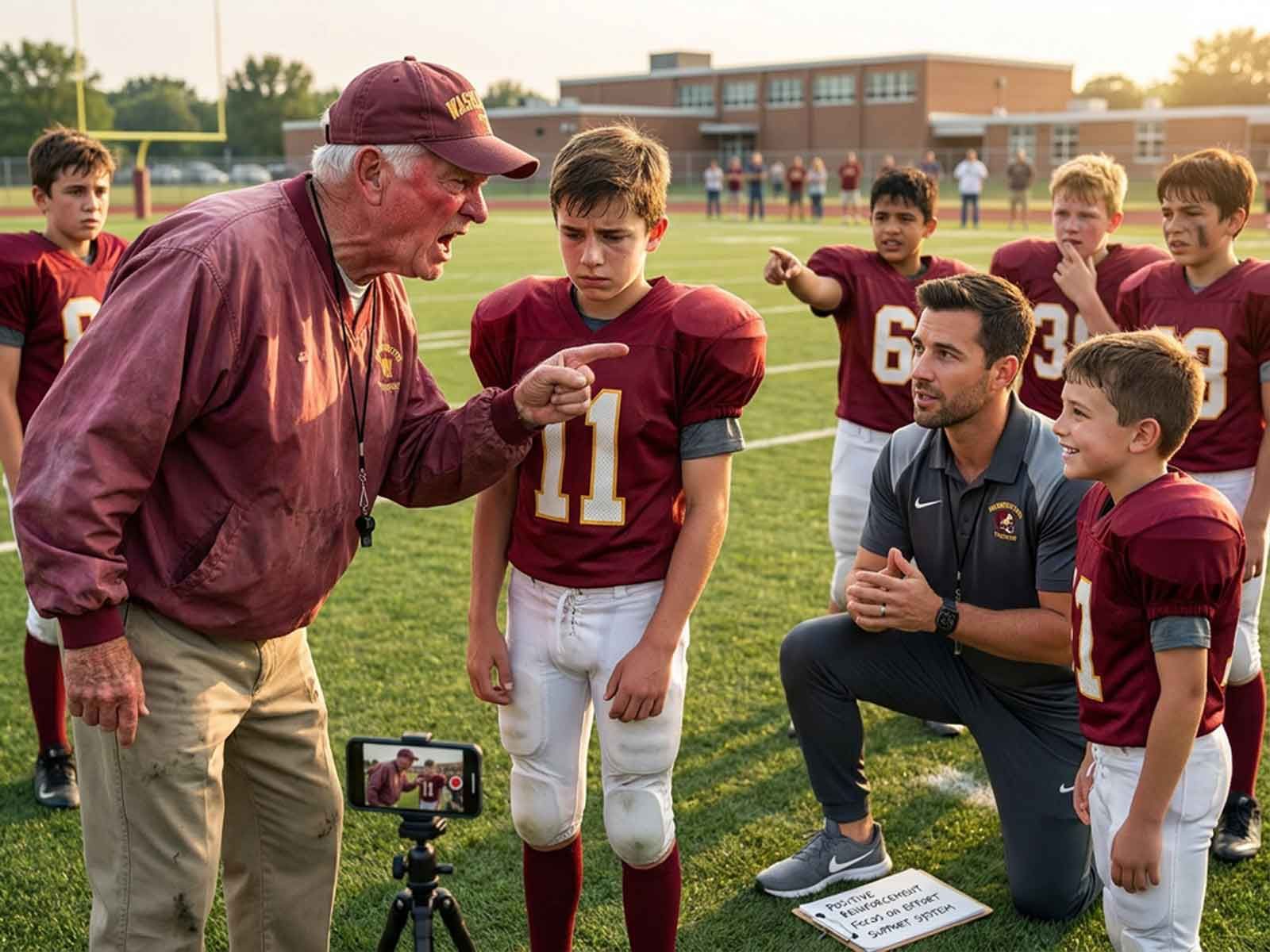
The Internet and social media will continue to expose the old-school ways of coaching. Everyone carries a phone, camera, or iPad to sporting events. We see coaches on the sidelines grabbing, choking, and pushing during games, and the cameras catch it. The next day, it is on ESPN, Twitter, YouTube, or Facebook. The whole world has access to how coaches treat athletes.
"It is easier to build up a child than it is to repair an adult. Choose your words wisely."
So why not take the time to learn a new, more empowering, and respectful way of coaching? There are great organizations out there, like the Positive Coaching Alliance and Navicore, that have developed the CORE Multi-Dimensional Awareness Profile (CORE Map) and offer powerful resources to help educate coaches of all levels about this new, empowering model.
The old way of coaching is fading away. Kids are different these days, and the harsh treatment that might work for one will cause a coach to lose most of the others who learn best under the new coaching model.
A positive momentum is changing the coaching paradigm. Today's athletes don't tolerate being treated poorly. They don't respond or play well under this negative type of coaching. It is only a matter of time before the camera or cell phone catches up to dysfunctional behavior.
Ask for help and support, seek out guidance, and find a mentor. It is time to take action.