Peak Performance · February 2026 · 7 min read
Mental Toughness in Skating, Skiing, and High-Pressure Sports
By Robert B. Andrews, MA, LMFT
Lessons from the Olympic arena
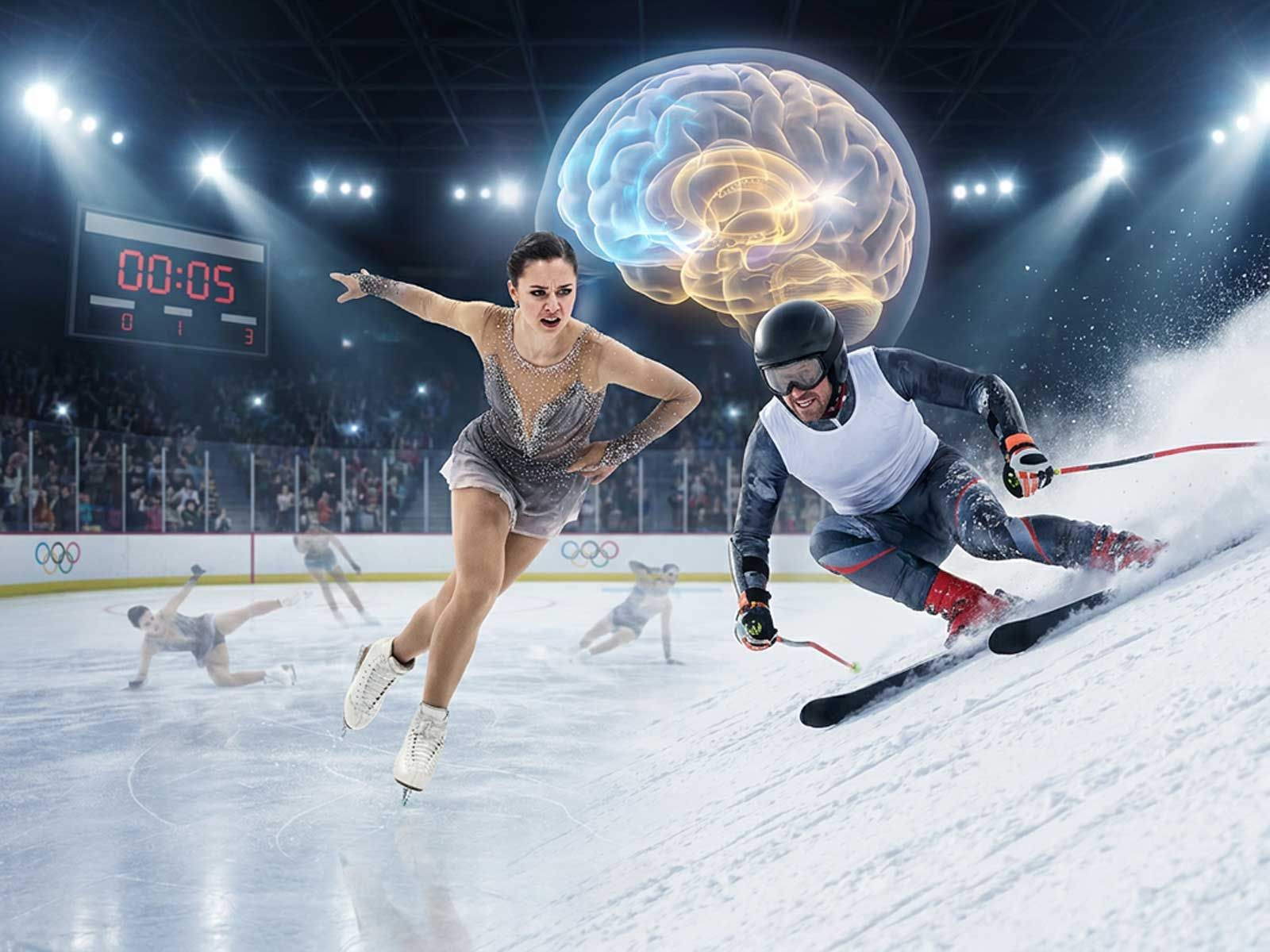
When you watch a skater launch into a triple axel or a skier attack a downhill course, you see more than just physical skill. You are witnessing a mental battle, one that is often invisible but decisive. In skating, skiing, and other high-pressure sports, the mind is the real arena. Falls, chokes, and comebacks are not just about muscle memory; they are about mental toughness, resilience, and the ability to reset when everything is on the line.
The 2026 Olympic men's figure skating tragedy: a case study in pressure
Nowhere was the power of the mental game more visible than at the 2026 Winter Olympics in Milan. Ilia Malinin, known as the "Quad God" for his historic quadruple axel, arrived as the overwhelming favorite for men's figure skating gold. He had not lost a major competition in years and led the field after the short program.
Yet, when the pressure peaked in the free skate, Malinin fell twice, downgraded his signature jumps, and finished a shocking eighth. The world watched as he grabbed his hair, visibly shaken, and left the ice on the verge of tears. The nerves and weight of the moment overwhelmed him, and he later admitted, "All the traumatic moments of my life really just started flooding my head… and I just did not handle it."
Malinin's experience is a powerful reminder that even the most technically gifted athletes are vulnerable to the mental side of sport. The Olympic stage magnifies everything. The crowd, the expectations, and the knowledge that millions are watching can turn routine skills into mountains. In Milan, five of the final six men's contenders fell during their routines. Only Mikhail Shaidorov of Kazakhstan kept his composure, skating clean and winning his country's first Winter Olympic gold in 32 years.
The reality of falls and failure
In skating and skiing, falling is part of the process. To land a new jump or master a technical run, you have to commit to launching yourself into the unknown, knowing you will fall hundreds of times before you get it right. That is not just physical courage; it is mental toughness in action. The best athletes are not the ones who never fall; they are the ones who get up, refocus, and go again, even when their confidence is shaken.
Elite skaters and skiers have all battled the same issues, mistakes, frustration, and the sting of public failure. The key is learning to focus on your routine after a bobble and having the courage to finish strong after a setback. This is where mental toughness separates the good from the great.
Choking under pressure: why it happens
Choking is not just a buzzword; it is a real phenomenon that can derail even the most prepared athlete. Choking happens when the pressure of the moment overwhelms your ability to perform a skill you have mastered in practice. It is not a random bad day; it is a specific negative response to perceived pressure, whether that is the crowd, the stakes, or your own expectations.
Research shows that choking is linked to factors like anxiety, perfectionism, fear of negative evaluation, and self-consciousness. In skating and skiing, where routines are judged, and every move is scrutinized, these pressures are magnified. The more you care and the more you want to prove yourself, the more likely you are to overthink and choke when it matters most.
The mental arena: what's really going on
The mental arena in sports like skating and skiing is crowded. Athletes are juggling many challenges, including:
- Fear of falling or injury. After a hard fall, your brain's survival instinct kicks in, telling you not to try again.
- Perfectionism. The drive to get every detail right can lead to overthinking and hesitation.
- External pressure. Coaches, parents, judges, and even social media can add layers of expectation.
- Internal dialogue. That inner critic gets louder after making mistakes, making it harder to reset and focus.
- Fatigue and stress. Long seasons, travel, and the grind of training can wear down even the toughest minds.
All of these factors can drain your mental and emotional energy, making it harder to perform at your best.
Building mental toughness: what actually works
Mental toughness is not just about being tough. It is a set of skills you can train, just like your body. Here is what makes the difference:
1. resetting after mistakes
The best athletes have routines for what to do after a fall or a choke. They breathe, reset, and focus on the next move, not the last one. This ability to reset quickly is a hallmark of mental toughness.
2. managing pressure
Learning to perform under pressure means practicing under pressure. Simulate competition in training. Use visualization to rehearse high-stakes moments. The more familiar the pressure feels, the less likely you are to choke.
3. healthy self-talk
Replace the inner critic with a coach's voice. After making a mistake, instead of asking, "What's wrong with me?" try, "What's next?" or "Trust your training." This shift keeps you in the present and out of the spiral of self-doubt.
4. embracing the process
Understand that falls, mistakes, and even chokes are part of growth. Every elite skater or skier has a highlight reel of failures behind their podium moments. Mental toughness means seeing setbacks as feedback, not as a verdict on your talent.
5. seeking support
Sometimes, the mental arena gets crowded with anxiety, fear, or trauma, especially after serious falls or injuries. Working with a mental performance coach or a licensed provider can help you process these experiences and build stronger routines for the future.
Stories of resilience: maxim naumov's Olympic journey
The 2026 Olympics also gave us a powerful example of resilience in Maxim Naumov. Just a year before the Games, Naumov lost both his parents in a tragic plane crash. He carried their memory with him onto the ice, holding a childhood photo close to his heart before each skate. Despite the unimaginable grief and pressure, Naumov finished his program and received a rousing ovation. He later said, "The only way out is through, and everyone has the ability to do that, to remain strong in your mind, to have will power, and do things out of love instead of fear." His story is a testament to the power of mental toughness and the human spirit.
The impact of judging and external controversy
Mental toughness is also tested by factors outside an athlete's control. The 2026 Olympics saw controversy erupt over judging in the ice dance competition, with Team USA's Madison Chock and Evan Bates narrowly missing gold amid allegations of biased scoring. These moments can be crushing, especially when athletes feel their best efforts are not fairly rewarded. Chock and Bates responded with grace, focusing on their performance and pride in their work, another example of resilience in the face of adversity.
The takeaway: the mind is the real arena
In skating, skiing, and any sport where the stakes are high and the margin for error is razor-thin, mental toughness is your greatest asset. It is what helps you get up after a fall, stay focused after a mistake, and perform when the lights are brightest. The physical skills matter, but it is your mind that decides whether you will choke or rise.
If you are struggling with falls, chokes, or the mental grind of your sport, know that you are not alone and that these challenges are trainable. With the right tools, routines, and support, you can build the mental toughness to skate, ski, and compete with confidence, no matter what the arena throws at you.
Ready to train your mind as hard as your body? Reach out to start building your own mental toughness plan. The next time you fall, you will know exactly how to get back up and finish strong.